
Building Family Relationships, Newsletter Articles, Posts for Parents, Self-care for Parents
The incredible shifts (and new challenges) in fathering today
In short …
- Research shows fathers today are far more involved and feel confident in caregiving.
- However, dads are not being offered the support, opportunities for engagement or perinatal/postnatal care that they need.
- We need system-wide change, as many systems are still based on old, gendered norms.
- In this blog, Maggie explores some key things that could help our dads feel better seen, heard and supported.
I have had the honour and privilege of working with dads for over 20 years. Early on, I mainly worked in rural communities and drove over many dusty roads. When I first started running seminars for parents, there were no dads. Now, in many of my seminars I can see up to 40% dads in the audience.
We need to celebrate this massive shift that has occurred culturally, when 9 in 10 parents say it is more normal for men to do care work today than in their father’s generation. On 23 April this year, I attended The Fathering Summit in Sydney, hosted by The Fathering Project. This was a wonderful opportunity to get researchers, academics, clinicians, advocates, parenting authors, politicians and other interested people in the one room to explore the full picture of fathering today.
Despite the significant shift in attitudes around fathering there are still many challenges that dads are meeting that make it harder for them to become the dad they really want to be.
We heard some preliminary data from the soon-to-be-released “State of the World’s Fathers” report. This draws from findings of a global study led by Equimundo: Center for Masculinities and Social Justice together with the Western Sydney University and partners (including in Australia The Fathering Project). Equimundo CEO Gary Barker shared that the international survey canvassed approximately 8,000 parents and of the 533 parents across Australia surveyed it was found:
- 97% of fathers enjoy caring and feeling confident as caregivers.
- 94% of fathers say their partner sees them as a competent caregiver.
- 67% of men identify financial provision as the most important fathering task
- 38% agree or strongly agree that they “never seem to get it right” when doing care or housework.
– Source: Summary Report: Australia 2026, State of the World’s Fathers. Access via The Fathering Project.
Over two seasons of my podcast, The Good Enough Dad, I have spoken to dads from all walks of life, and there is no question how much dads love their kids and want to be a better dad than their own father.
Many have expressed wishing there was a simple “game book”, but as we know in parenting, there are always moments that challenge us regardless of whether we are mum or dad. There is no perfect in parenting and that is something every parent needs to know before that precious little bundle arrives in their life.
Over the years, I have had so many wonderful discussions with dads who have been relieved to know that something that has been worrying them, like toddler tantrums, toddlers who bite or grumpy teenagers, are all developing normally. The relief can be palpable! I really believe there needs to be more focus on classes to educate dads about parenting beyond the birth! However, the delivery of the content and the environment both need to be given a makeover, not just how it is delivered to mums.
In fact, a recent report from the Movember Institute of Men’s Health emphasised just how important this is. At the summit, we heard from their Global Director of Research Associate Professor Zac Seidler that one in four fathers rated their physical or mental health as poor or fair in their first year of being a dad. At the same time, three in five had never had a health professional ask them during pregnancy or up to 12 months after their child was born, how they were coping or about their mental health. You can read more in their More Than a Provider Report.
Dads are hungry to join the parenting conversation
Many dads have told me that they don’t like reading parenting books even though they want to be able to upskill their knowledge. I love their honesty. Some have told me that they have found it helpful when their wife/partner just highlights certain parts of parenting books or just recommends reading one chapter, around a specific thing. I have had other dads tell me that watching my short “Maggie Moment” videos for parents on YouTube has been a great way to pick up some simple pragmatic steps to introduce into their fathering kitbag. And of course, these days there are lots of webinars parents can watch together. Finally, there are many dads who have told me that they like to listen to podcasts to gain extra knowledge that helps them to become the dad they really want to be. Hamish Blake’s podcast, How Other Dads Dad has been mentioned many times.
One of the challenges many dads have expressed to me, and which was echoed in the research, is that there are still entrenched gendered norms and expectations that continue to limit how much fathers can participate in daily care. I have had a number of dads say to me that women have commented to them when they are in a playground with the kids. “how lovely that you’re babysitting the kids.” I love the fact that sometimes when I visit playgrounds on the weekends, there are only dads and toddlers and kids!
There is a gradual shift in work environments around creating more flexibility for dads, but paid parental leave needs to be made more significant for dads. In a recent seminar in Newcastle, I met three stay-at-home dads whose wives are the primary earners and they mentioned how often they meet with negative comments about their capacity to care competently for their children! Seriously?
We need to see some significant changes at a system level, because many systems are still based on old, gendered norms. So often, they are solely focused on mothers.
Prenatal and postnatal education classes can improve the way they run as many dads feel a bit like a spare wheel. Engaging dads in these spaces, especially by something as simple as making eye contact and asking questions can make a world of difference for a new dad. In the State of the World’s Father’s research, more than half of Australian fathers surveyed “have never been made aware of, nor offered father-specific services”. That is despite almost a quarter of fathers saying they would have liked to be able to access to a fathers’ group when they were getting ready to become a parent. Changes in the health services to tailor their supports to be more inclusive of dads was something that came up many times throughout the summit.
Peer support, where dads support other dads, can make a profound difference. There are many grassroots groups starting to happen, and The Fathering Project is leading the way in gathering dads together in schools, communities and sporting groups.
Creating groups of dads is a great idea however getting dads to come along can be a challenge. Many men are reluctant to create new friendships especially when they are just learning to navigate their new role as a dad. The role of community for dads is very important because it can feel easier to come to something when you know there will be other dads there who you might know, even casually. There is a fundamental need for new dads to feel they are in a safe environment, where there is both trust and respect, especially around the vulnerable aspects of fathering.
I recently visited The Dad Space, a weekly community playgroup for dads and kids at The University of Wollongong’s amazing Early Start Discovery Space. While there, I had a chat with a lovely dad of two little girls who validated everything I have just written.
One of the key factors highlighted in both of the research reports I’ve mentioned here was how dads’ wellbeing is being impacted by the pressures of parenthood, and this often goes unnoticed. Many fathers in the State of the World’s Fathers study reported significantly higher levels of distress than mothers. Some of the experts and practitioners at the summit suggested we need to directly ask fathers how they are travelling, rather than just assume they will come forward and volunteer that information. Another key concern expressed was that often dads who have been identified as having mental health challenges, fail to follow the recommended therapies.
- One in 10 fathers experience depression in the first year of fatherhood.
- 33% of fathers reported suicidal thoughts in the past fortnight of being surveyed.
- 52% of dads drank more than five drinks in one sitting during the last fortnight.
– Source: Summary Report: Australia 2026, State of the World’s Fathers. Access via The Fathering Project.
The first year of being a dad is a year of massive change on all levels. There is no question that giving dads a serious heads up to the challenges of that year would be beneficial to all dads.
The Movember report found one in five dads said they had become more isolated or lonely since becoming a father. In my counselling work and in my work with dads, I have had many say to me they wish they had known how enormous the change would be in their relationship with their wife or partner. Often, they were reluctant to admit that they felt abandoned and kind of lonely because the mother was completely absorbed by the new baby. This can be a really normal response however if you know it is coming, then you can navigate it differently.
Male loneliness is a significant factor in declining mental health for men of all ages. We are a social species, and we have a fundamental need to be connected and to belong.
Imagine if we can create these dads’ groups before the babies arrive, where dads might go for a walk together, play a game of tennis or golf and have a chance for a bit of socialising, where dads can speak openly about becoming a dad!
On The Good Enough Dad podcast, I ask every dad for some of their fathering fails, as well as their fathering wins because I want to normalise that being good-enough as a parent is all that matters. We also finish each podcast by asking a big question that the dads do not know is coming, because I know that men do have a moral depth to them about becoming a father. That question is “what is the one thing that you want your children to learn from you, because you are their dad?”. Each time I ask it, I see how deeply it impacts every dad. Yes, there are tears, there are deep breaths and the answers are beautiful.
I’ll leave you with one of my favourite responses, which came from former professional footballer and boxer turned mental health educator Joe Williams:
“I don’t want my kids to just hear me say I love them — I want them to know it and to feel it.”
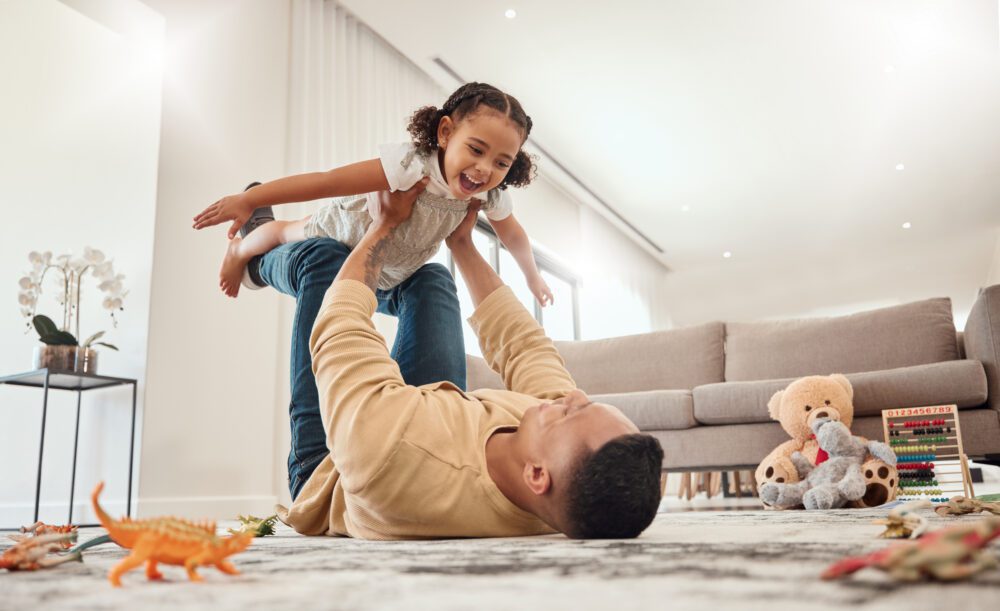
Image credit: © PeopleImages.com / Depositphotos.com