Anxiety & Fear / Calming Children, Newsletter Articles, Posts for Parents, Self-care for Parents, Stress
The power of breath in parenting and life
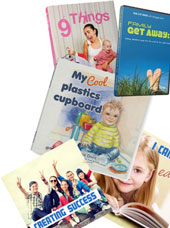
In the opening chapter of my first book, Saving our Children from our Chaotic World: Teaching children the magic of silence and stillness, I included this quote from Daniel Goleman.
“Relaxation training can help people deal with distress. Helping people to be able to create for themselves a ‘relaxation response’ the opposite to a stress arousal response is incredibly beneficial to one’s health long term.”
– Daniel Goleman, Emotional Intelligence (1996)
I know it’s almost laughable that I considered the world chaotic in 2002 when I was writing that book. This was well before the full impact of the digital world, before social media, before Pinterest, before TikTok, before LinkedIn and before smart phones! And yet I had already noticed a difference in my classrooms back then – that something was making my students noticeably more anxious or stressed.
I was not the only one concerned at the time.
Professor Fiona Stanley, a world authority on child health, expressed her concern at a conference in Australia more than 20 years ago:
“Health and behaviour problems among children have reached frightening levels and a national campaign is needed to avert a looming social crisis”. – The West Australian, November 9th 2002
Prof Stanley was the head of the Telethon Kids Institute in Perth (now called The Kids Research Institute) and I donated part proceeds of my first book to the Institute to help with their research to improve the health and wellbeing of children.
My lightbulb moment with mindful breathing
Now these days, there is a lot of information out there about wellbeing and breathwork and that kind of thing but back when I initially had these concerns, it was a winding path of discovery.
In the early 1990s I met a wonderful woman called Petrea King, who came to Albany to help train volunteers for the first Albany Hospice. She guided us on a visualisation that took us to a beach where we could see a dolphin. The beginning of the visualisation included deep breathing and at the end there was more deep breathing. When I returned to full consciousness, I could not believe how absolutely fabulous I felt. The depth of calmness in my mind and body was something I had not felt since childhood. As a farm kid I spent a lot of time in nature in this transcendent state of stillness and oneness. I immediately wanted to know more.
The next thing I did was take up tai chi. Again, I was so surprised that after my first session I had the best sleep of my entire adult life. For those of you who are not familiar with tai chi it is a slow-motion mind-body practice, and involves a lot of careful breathing.
As I had found these things so instantly beneficial, I decided to start doing them with the students in my classrooms and I also ran a relaxation class for teenagers. I then went on to run relaxation classes for women and these turned into one-day retreats, which then ended up being full weekend retreats for women. Much of the focus for all these things was about using our breath more consciously and mindfully.
Then I created my first audio tape called Rainbow Balance meditation for the women in my class. Yes I did say tape, and eventually it went onto a CD and now it’s available as a digital download! How times have evolved!
I noticed immediately in my classrooms that when I had brain breaks—which sometimes involved students simply resting on their desks while breathing more deeply, as well as listening to the short visualisations—the changes were noticeable. Not only was the classroom a calmer place to be, students were getting along better and the big surprise, was I noticed their grades were improving. So having a calmer mind and a calmer body, was such a winner.
Recently, after a seminar based on my last book, Help Me Help My Teen, a very tall young man came up with his mum to speak with me. Apparently, as a four-year-old he had struggled to sleep, and his mum had found my Sleepytime visualisation (which is free on my website) and it had helped him to sleep. Following that, this boy said he began to use Beach Bliss and then Relax and Escape right through primary school and into high school. This helped him, he said, not just with his sleep but when he felt anxious around tests and exams. This young man was now at university and he wanted to thank me that I had helped him over the years. We both had a huge hug and I felt emotional for quite some time afterwards.
When we can improve our capacity to calm ourselves using breath, music slower than a heartbeat, white noise, or other calming sounds, we deepen the rest-and-digest state that every human being’s nervous system needs.
A book called out to me at my local library over the holidays. It’s called Breath: The new science of a lost art by James Nestor. I have found it absolutely fascinating and I had no idea how complex breathing can be. Two of my sons were mouth breathers as children and still are today. One of the arguments in the book is that mouth breathers can change the structure of their mouths and impact their jaw formation! Interestingly, both of those sons needed major orthodontic work, while the other two nose breathers haven’t.
Nestor explores ancient knowledge around the importance of breathing and its link to certain cultures that practice very specific patterns of breathing. Indeed, he claims in one ancient culture, mothers and grandmothers help babies become nose breathers if they are mouth breathers.
Sometimes babies with poor sleep are referred to specialist sleep practitioners, who have extensive qualifications around the complexity of breathing – sometimes it’s called Orofacial Myofunctional Therapy.
I have noticed over time how complex their assessments have become. One of these practitioners, Tash Duffin, explains in this blog that “Sleep Disordered Breathing (SDB) is when breathing during sleep is sub-optimal, affecting sleep quality. It exists along a spectrum, from inefficient (like quiet open mouth breathing), to dangerous (think full blown Obstructive Sleep Apnoea). SDB occurs when there is mouth breathing during sleep. Importantly, the mouth doesn’t have to be wide open, a lack of lip seal, can also indicate SDB.”
Additionally, having a high palate, a tongue tie, large adenoids and large tonsils can all impact sleep regardless of what a parent may be doing to help improve their baby’s sleep. My younger son really struggled with his sleep and would often wake up gasping and it took quite some time to convince our doctor that he had a significant problem. Once his tonsils and adenoids were taken out, he slept so much more soundly, and he grew in a much healthier way. The dark rings under his eyes disappeared in a matter of weeks.
Nestor’s book also explores the changes in food over the centuries and purports that it has seriously impacted the way we breathe as it has shaped the way our jaw and our palate are formed. Fascinating! One of my granddaughters recently had some orthodontic work done to help expand her jaw and other parents have told me that their children are having similar work before the jaw stops growing.
Breath and the vagus nerve
Scientist and professor of psychiatry at the University of North Carolina Dr Stephen Porges, who has helped the world come to understand the importance of the body’s vagus nerve, also speaks about how breath helps restore better health through something called vagus nerve stimulation.
As Nestor explains on page 150 of Breath:
“Breathing is an autonomic function we can consciously control. While we can’t simply decide when to slow or speed up our heart or digestive, or to move blood from one organ to the other, we can choose how and when to breathe. Willing ourselves to breathe slowly will open up communication along the vagal network and relax us into a parasympathetic state.”
Now you might think that the more you breathe, the better everything will be. And it’s not that simple, according to Nestor. Over-breathing and feeding the body more air than it needs can actually be damaging for the lungs right down to the cellular level. He argues that the majority of us breathe more than we should today, without realising it. Certainly fascinating food for thought.
However, willing yourself to breathe heavily for a short, intense time can be profoundly therapeutic. This is why I often recommend to stressed parents and educators that they pause and take three deep breaths when things get tense. What the science shows is that the outward breath through your mouth is most beneficial when it is longer than the inward breath through your nose.
Nestor argues strongly for one form of breathing rather than just taking three breaths:
“Through all my travels and travails there is one lesson, one equation that I believe is at the root of so much health, happiness and longevity. I’m a bit embarrassed to say it has taken me a decade to figure this out and I now realise how insignificant it might look on this page. But lest we forget, nature is simple but subtle.
“The perfect breath is this: breathe in for about 5.5 seconds, then exhale for 5.5 seconds. That’s 5.5 breath a minute for a total of 5.5L of air.”
I have been taking three deep breaths for a very long time and know that it definitely helps me feel calmer in the moment. During Covid my doctor son sent me a device to measure my heart rate and oxygen levels so that if I got sick and my oxygen levels were too low, it was a sign I needed to get to the emergency department. One day I had it on my finger and I thought I would try my three deep breaths. What really blew me away was that after the third breath my heart rate had dropped 10 beats. So I had clear evidence that those three breaths definitely makes an impact on my heart, and my nervous system.
It’s exciting to me that there is so much more awareness of the power of breath these days and my publisher Pan Macmillan Australia have just this week released a new book on the topic: Unlock Your Breath by Rory Warnock. You can find out more about it here, and also access free guided and non-guided breathwork videos on Rory’s YouTube channel. I’m certainly looking forward to taking a deeper dive into his work.
Using breath in ‘hot’ moments
Breath plays a key role in many of the strategies I share with parents to help them deal with tricky moments where you really feel you’re starting to lose your cool. You can learn more about some of these in my Maggie Soothers video playlist here. (I filmed these videos during the pandemic but, honestly, the techniques are useful anytime you feel stressed or anxious).
Some of my favourite strategies are to use a big sigh to relieve stress. There is also the gentle head hold, which can really help you/your child feel safe and calm, and in this video I talk a bit more about using breath to overcome stress.
And then of course there is my parental pause…
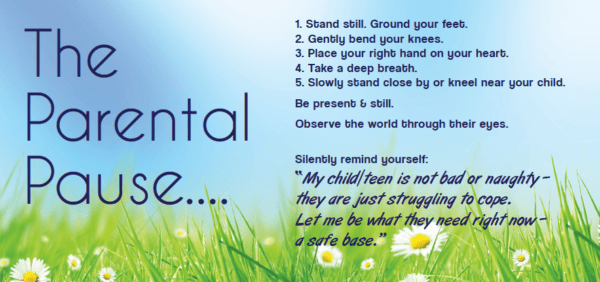
I’m going to finish this blog by sharing one of the Appendices in the back of my book (from 24 YEARS AGO!), Saving our Children from our Chaotic world.
Summary of Benefits of the Magic of Silence and Stillness
- Creates optimal conditions for learning
- Opens mind to creativity and better problem-solving
- Builds emotional intelligence and competency
- Improves energetic fields — both individual and group
- Nurtures the inner world and the human spirit
- Builds resilience skills for life
- Improves immune system
- Improves ability and capacity to think
- Lessens fear – imagined or real
- Creates opportunity to ‘be’ rather than ‘do’
© Maggie Dent 2003, from Saving our Children from our Chaotic World
Finally, please check out the free audios on my website for yourself, your kids or your students – they are a wonderful way to explore breath and visualisation.
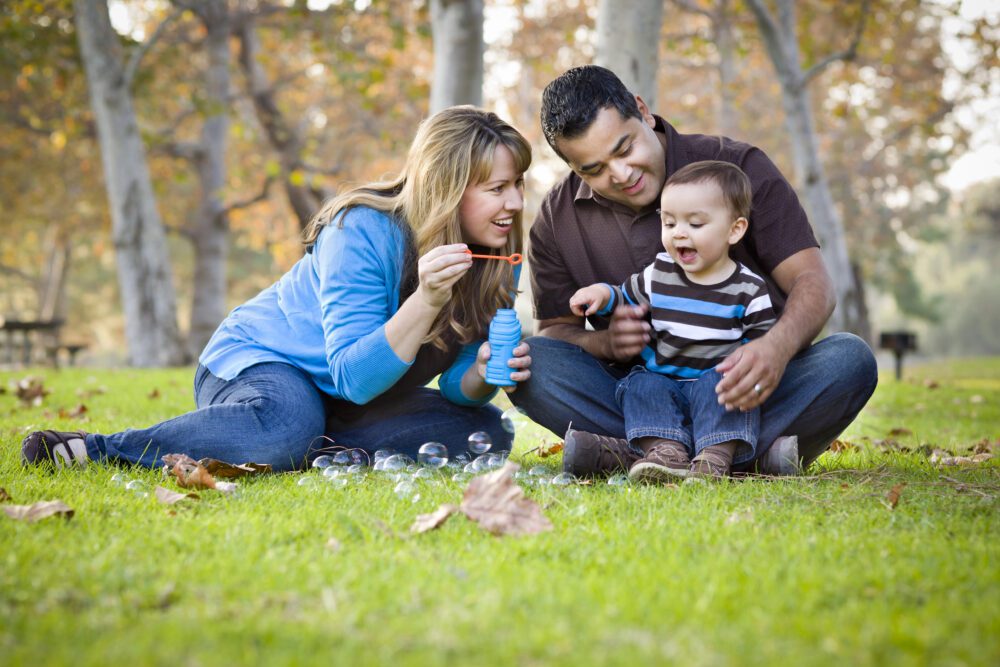
Image credit: © By Feverpitch /Depositphotos.com
Join me with Hey Sigmund psychologist and bestselling author of Hey Warrior, Hey Awesome and more, Karen Young, for our UNPACKING ANXIETY masterclass. We go live on Saturday 21st February but, even if you can join us live, everyone who signs up gets lifetime access to the replay, handout and free resources.
Sign up