
Newsletter Articles, Posts for Parents, Raising Adolescents, Raising Boys
Teen boys: a positive perspective?

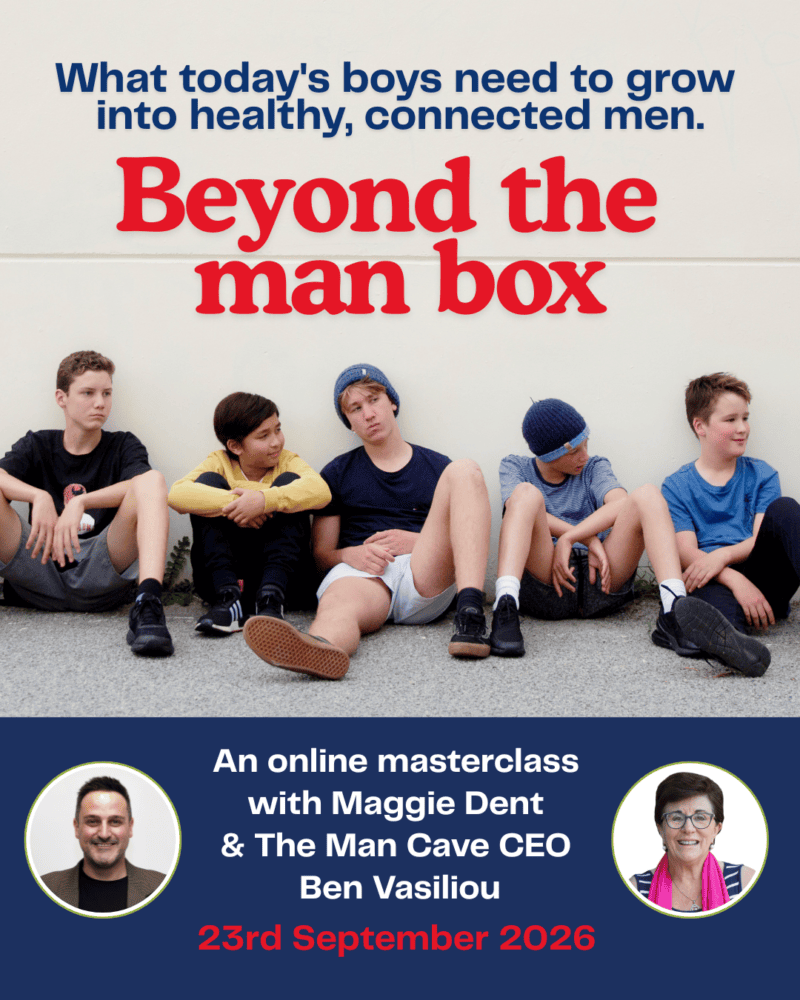
In short … We all shape our beliefs and expectations not only from our own life experiences and role modelling, but from what we read, see and hear. In recent years, there seems to have been a shifting of the lens around how our teen boys are seen. I feel like this has only worsened since the Netflix series Adolescence, and the Louis Theroux documentary, Into the Manosphere, aired. That narrative is shining a bright light on only one view of our teen boys. Adolescence is a particularly vulnerable stage and it is when our emerging adults are shaping how they come to see themselves and what they believe, and they can be very easily manipulated. Leading boy experts in America have argued for a long time that our teen boys are more ‘morally fragile’ to manipulation than our teen girls. We need to make sure that as the adults in their lives we aren’t inadvertently reinforcing some of those negative perceptions they are being fed. Following concerns from a number of teachers and people who work in schools, in 2022-2023 I collaborated with the team from Collective Shout, to conduct research into the prevalence of sexual harassment in schools. We had over 1000 responses that did show an increase in this behaviour. Teen boys have long been known for making inappropriate comments at times, often trying to make their friends laugh, but this behaviour that was being reported was different. Sexual groaning noises, rape threats and threatening behaviour towards girls and female teachers was relatively new. What was interesting, was that some schools had seen none of it all. The results were significant and pointed to a problem that many schools are working to address. But we must be mindful of our language, and not making the sweeping generalisation that this is how all teen boys behave now. It’s not so simple as that, and when boys hear that it can become a self-fulfilling prophecy while they are in this stage of shaping their identity. There are significant concerns around the influence behind this shift and Louis Theroux’s documentary shows that disturbingly well. Over the last 10 years boys with phones and other devices have been marinated in disgusting, degrading pornography and so often they are targeted by far-right male influencers who have misogynistic beliefs that are disrespectful towards girls and women. The Big Tech companies have embraced this provocative content by ensuring the algorithms target our tween and teen girls and boys because they are easier to manipulate and primed for addiction to their devices. Of course, their attitudes will be influenced by what they see and hear daily or even hourly for many. There is a significant exploration of this by Kirra Pendergast in our book Digital Freedom which exposes that the blame for so much of this cultural shift in adolescence lies with Big Tech. They are powering so much content that is unashamedly shifting attitudes in unhealthy directions at a time of critical development. While this may be concerning, it also gives us the biggest sign of how we can make corrections going forward. The landmark settlement with Meta with 29 states in America, which is supposedly going to see Meta limit how much of this harmful content can be accessible by under 18-year-olds, is a tiny step in the right direction. Sadly, this may not impact users outside the US, and they have 10 years in which to make the changes – but it is a big first step. It’s also a step towards making Big Tech accountable for their part in causing many young men to adopt attitudes from the manosphere. In recent months much has been made about the research coming from the University of Melbourne that showed that a concerning proportion of the 1,122 adolescent boys and girls surveyed express misogynistic attitudes and attitudes permissive of violence against women – and this is spilling over into classroom behaviour, which supports what we discovered in the SHoT survey outlined above. In the Melbourne Uni study, a third of teen boys surveyed expressed these attitudes, plus a mistrust of women and a belief in traditional gender roles. The findings were very concerning. Among the survey’s 661 boys aged 13-17, the study found: Further, the study showed that it was teen boys who were the most likely to agree with violent extremist attitudes. More than a quarter agreed with right-wing extremist attitudes and 27% with white supremacist attitudes. I want to acknowledge here that plenty of our teen girls share problematic views and the research showed that “Gen Z women were twice as likely as Millennial women, and four times as likely as Gen X women, to agree that marriage entitles a husband to sex with his wife, even if she does not want to.” It is telling that misogynistic views were most strongly linked to engagement with ‘manosphere’ content, online dating and pornography. Thanks again to Big Tech for giving our young people this narrow view of how to be. Reading this latest research, I was interested to go back to the survey I did for my 2020 book, From Boys to Men. I had 957 responses from boys aged 12 to 18. We questioned them about the main worries and concerns they had in their life. In order of importance, they listed. We also conducted a survey of men more than 1,672 men aged over 30 reflecting on their own adolescent years and what they remember being challenged by and the results were interesting. Themes: These surveys show just how confusing and challenging these years are. If boys are not given the support via healthy education and connection, especially from people who value them and who they trust, they are much more likely to become lost in the negative messaging of the manosphere. Mentors or, as I call them lighthouse figures, are really the key to correcting the cultural shift that has been happening since phones landed in our children’s lives, especially for our vulnerable teen boys. If we take a look at the statistics from the recent research from the other side, it paints a different picture that might look like this: Boys can’t be what they can’t see, so let’s pay attention to the picture we are painting. There is a mistaken perception that boys are not as deep as girls, and nothing could be further from the truth. In my experience as a teacher and a counsellor, I have heard the profound concerns and the optimism of many tween and teen boys. So often they shut down by the teen years because the people around them have been conditioned to think they don’t care. When we engage with our boys, we might hear a different story… Healthy boy communication – as I explore in depth in my books on boys – is all that is needed to open up about their reality and what could make it better. This response from my boys’ survey shows what can happen when a boy believes you want to hear what he has to say: Young people now are suffering more than others think, elders look down on us as if we are spoilt, addicted to our phones and more. The truth is that you see us on our phones as we make more friends on online platforms that actually care than in reality. Elders tell us we’re lazy and lock ourselves in our rooms when in reality our rooms are the only places we feel safe anymore without being judged. We lack motivation nowadays due to the standards and expectations others have set for us, we feel pressured and unheard. We overeat, under eat, don’t shut up or shut up completely, have bursts of energy only to be shut down by others, feel confident in our bodies only to be told we’re ugly and it’s not just our generation telling us this, its older generations, its fake magazines, it’s photoshopped models, its peer pressure, etc. And when all this pressure finally pushes us to our breaking point, it causes us to take drugs, it causes us to vape, it causes us to be rebellious and even causes US to commit suicide just to escape this cruel reality and world we stand on. Hope my words help, have a lovely day. xx and another: I have been getting angry and frustrated recently about many things, from sabotaging myself when it comes to assignments to snapping at my siblings, I’m not sure how I can explain that to people. And another: I feel invisible. Lonely and invisible. I’m angry every day. When I walk into school my anger rises. No one noticed me or says hello and I feel depressed. I’m feeling flat lately and don’t know when things will get better at school with finding friends. When asked what they enjoyed about being a teen boy here is how some of the boys I surveyed responded: The best thing about being a teen boy today is … … being able to hang with the people I love and just live, having fun and being happy, helping and seeing others. … having access to the internet. I can ask the internet anything I want without being judged. It also makes it very easy for me to teach myself new skills and dive deeper into topics from school that I’m interested in. For example, I love playing music and the internet gives me access to all kinds of information on music theory and chord charts, etc. … I’m alive, I’m a human being with many great advantages. Born in a wealthy country. Just existing is so cool as the human race is so rare and unique in the universe. So many teen boys are doing okay and are not exhibiting the behaviours that we are reading about in the reports. We need to highlight their stories and voices, and welcome them to speak up. Of course, we need to do this alongside addressing our concern about and speaking up against the rise of misogynistic, extremist attitudes but let’s not focus entirely on that when we are talking about boys. The Melbourne University report identified several recommendations for policy reform, directly informed by their findings, including: I am writing this article ahead of yet another documentary series (coming out on 13th October), from the ABC called The State of Man, hosted by Marc Fennell. I am hoping it offers a more balanced view than some of the other recent series. If we keep in mind that boys cannot be what they cannot see –we need to marinate them right through boyhood onto the bridge of manhood with the stories of good men who can be strong, brave and funny and caring. It starts with us, shining some hope for today’s boys regardless of the media narrative. Image credit: Samara Wheeldon For more on this, join Maggie for her online masterclasses about healthy mandhood, running throughout the end of 2026. First up was her conversation with youth advocate, educator and fellow ‘boy champion’ Daniel Principe on Helping Boys Be Their Best Selves. This was followed by Beyond the Man Box, with The Man Cave CEO Ben Vasiliou talking about tween and teen boys. On 15th October, our third masterclass – for anyone living or working with boys of all ages, is The ultimate guide to raising boys with Maggie Dent and Dr Billy Garvey.
So what’s been happening over the last 10 years?
What are teen boys telling us?
–‘Young people more likely to hold hostile attitudes towards women, study finds’, 17 August 2026. University of Melbourne newsroom.What else do we hear from teen boys?
Can we view these statistics through a different lens please?
Beyond this, as a boy champion, I would like to add the following recommendations:
Be reassured – you can still raise boys to be good humans in today’s digital world.