


Newsletter Articles, Play & Nature Play, Posts for Parents, Screen time, digital & online safety, Stress
Saving our children from our chaotic, instant world
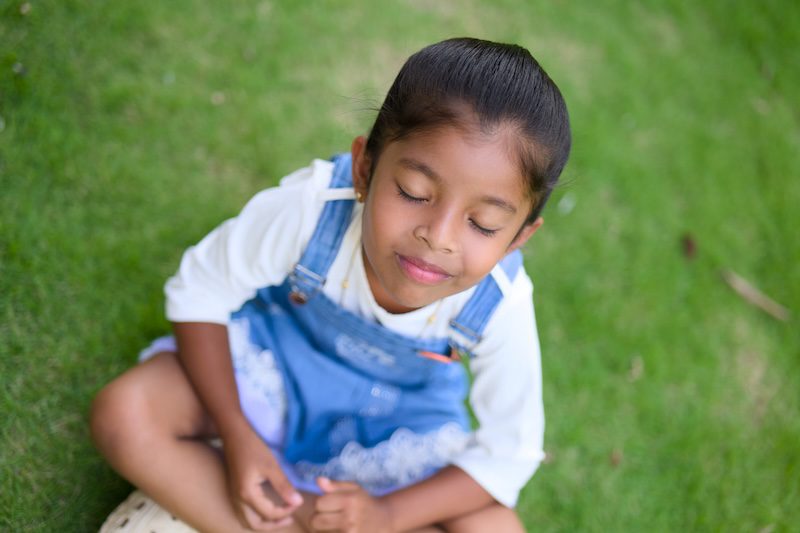
In 2003, I published my first book (now out of print) called Saving Our Children from Our Chaotic World: Teaching Children the Magic of Silence and Stillness. What a joke, thinking the world was chaotic back then.
Compared to today’s world, 2003 was a lot calmer because the digital world had not swamped childhood. Our tweens and teens didn’t have smart phones or social media, and disgusting content such as pornography, beheadings, school violence on video, sexual extortion and cruel cyberbullying were not really a thing. Nor was it commonplace for AI to create deep fakes, causing untold harm especially in school communities.
Twenty-two long years ago I began that book with this message:
The Magic of Silence and Stillness.
Silence and stillness does have a magic to it! It doesn’t matter where you find it – in your home, your workplace or your classroom, when it occurs something magical happens.
More so than ever before we are seeing:
- More violence and assaults in our schools and communities
- More children than ever before on Attention Deficit Hyperactivity Disorder (ADHD) medication to manage hyperactivity and inability to concentrate
- More children presenting with depression or emotional overwhelm and overload
- More cases of sexual abuse
- More children suffering obesity and diabetes
- More children suffering alcohol and drug abuse
- More children homeless
- More children being diagnosed with mental disorders like obsessive compulsive disorder and severe anxiety disorders
- Children as young as five who are wanting to die
- Children as young as three on sleeping medication to help them sleep
- An increase in childhood and juvenile crime
- No real improvement in school retention rates for our Indigenous children
- An ever-increasing teen suicide rate
Professor Fiona Stanley, a world authority on child health, expressed her concern at a recent conference in Australia:
“Health and behaviour problems among children have reached frightening levels and a national campaign is needed to avert a looming social crisis.” – The West Australian, November 9th 2002.
Cultural changes are happening, which are stealing childhood. We are minimising the importance of childhood by hurrying up our kids’ growth and development to get them ready for school – as though school readiness was the main aim of childhood. The pressure being put on parents to be perfect, or to raise exceptional children who shine above others is being fed by the digital world. In the Western world the pressure to achieve financially, as though that is the most important thing in life, has overtaken the importance of living meaningful lives and making the world a better place.
Consumerism has pressured people to follow trends and fads that now have our homes full of stuff – often made of plastic – and often kids have too many toys that can suppress their natural curiosity to play in autonomous ways. Look at the cheap clothing companies that promote having lots of clothes that not only end up in landfill, they facilitate poor pay and working conditions for many folks in developing countries. The overscheduling of childhood is another hidden pressure that parents can struggle with making choices based on the unique needs of their child.
This pressure is also playing out in the lives of our boys and girls and I have been told of some teen girls who are doing three jobs, while completing school to ensure they become rich and famous. Of course, the algorithms and social media see these same girls seeking unrealistic beauty standards. Is it any wonder we have an epidemic of teenage anxiety, depression and loneliness?
This is not what humans as a social species are meant to be doing. We are not meant to be in competition with each other, we are meant to be in cooperation and collaboration with each other.
This is exactly what traditional kinship communities like the First Nations peoples of Australia have done over 60,000 years: We look after each other —no matter what.
Back to another quote from my book – remember I wrote this 22 years ago – before smart phones and social media!
Many young people are in a spiritual void, where emptiness, a lack of meaning in their lives and disconnection from society are part of their reality.
Then there are the simple things:
- Too many passive pastimes, from early childhood – too much TV, computers, computer games;
- Too little quality time with family – especially recreational time spent surrounded by nature and being active;
- Too much exposure to the world’s disasters via the media;
- An excessively consumer-driven world that conditions our children that happiness will come from possessions rather than relationships;
- Too little value on virtues, especially now that traditional religion has decreased its influence in people’s lives;
- Poor community participation in shared raising of our children;
- More disconnection in families, especially extended families;
- Poor understanding of the role of emotional intelligence and resilience building amongst some teachers and parents;
- A rapidly increasing ‘welfare mentality’.
As an independent counsellor and educational consultant with a special interest in emotional literacy and human resilience, I am writing this book with a sense of urgency. I know that our children’s world can be made better. I know that because I am witnessing it in some homes and schools where the emotional wellbeing of children does come first. Research has long held the belief that happy, calm children learn best. A safe environment where differences are accepted and welcomed allows children to learn social skills as well as academic skills. Humans are programmed to be social animals. Social behaviour is not genetic. It happens through the constant interaction of humans with other humans over a long period of time.
The magic of silence and stillness is something that helps shape the developing child in a positive way. While there are many cognitive (left brain) benefits from teaching the magic of silence, there are even more emotional and social (right brain) benefits. The inner world of children today is in turmoil and the outer turmoil of the world that we have created probably contributes. I believe that children who can build a doorway to their own sense of value and worth will be better able to manage this chaotic rapidly changing world. This means children the whole world over, not just Australian children. This doorway is found on the inside rather than the outside. As explained by John O’Donohue:
We need to return to the solitude within, to find again the dream that lies at the hearth of the soul. We need to feel the dream with the wonder of a child approaching a threshold of discovery. When we rediscover our childlike nature we enter a world of gentle possibility. Consequently, we will find ourselves more frequently at the place of ease, delight and celebration.
–John O’Donohue, ‘Anam Cara: Spiritual Wisdom from the Celtic World’, 1997.
Our children are not just brains on a seat that is carried around by a physical body. Neither are they sources of data. They are so much more than that. When we starve the human spirit by disrespecting it, by stealing it from childhood we can create a human with a void inside them. Every child is a unique one-off person who has never been here before and will never be here again. They arrive with very unique potentials, some are gifts and some are challenges. Some shine early and easily while others take more time, and need more nurturing and care. Child development is gradual, and it takes time for them to grow cognitively, emotionally and socially — that is why childhood is meant to go slow.
In childhood, we need hours of play where a child has the autonomy to choose, to use their imaginations and where all their physical senses are being kept safe by caring humans, often from a distance rather than hovering.
In my resilience building blocks model that I created to show how to build resilience in children ,the top building block is nurturing the spirit. I believe this is the building block that is most needed in our world to heal our kids, our tweens, our teens, our young adults and maybe help older adults. Children with a strong human spirit have the natural ability to seek the light in our world, rather than the darkness.
Nurturing your child’s spirit
- Allow imagination and wonder to be a part of children’s lives.
- Develop a strong connection to the natural world.
- Ensure the arts are part of childhood—singing, dancing, music, painting, make-believe.
- Have special rituals and family moments.
- Build their sense of humour.
- Honour the sacredness of life.
- Build faith, belief in something greater.
- Build strong connections and belonging in communities.
- Value childhood as important.
Children need to experience the joy of discovery—awe and wonder in the real world are essential.
The brain wires all positive experiences like a web over all future experiences and builds a sense of anticipation of how life will be.
If children have a sense of being hurried, being endlessly tested and measured and not allowed opportunities to simply be, we pay a big price later because that’s all they will anticipate throughout the life.
They will miss the starry nights, the full moon, the big puddles, the beautiful plants and flowers, the soaring birds and the spectacular clouds. Every one of these can give them the dose of endorphins and dopamine that their heart and their head yearns for.
I have been writing about this for over 20 years because when I saw a troubled teen in my counselling room, who was struggling with life contemplating leaving it, the light within them had gone dark.
Here are some of my articles on this issue for further reading:
- Transcendence and Adolescence
- Honouring the human spirit in our homes and classrooms
- Helping teens find their own inner compass
- The world needs more kindness warriors
- Giving your kids the gift of emotional intelligence
- Feeding your child’s passion from the banquet of life
In my 10th and final book for parents, Help Me Help My Teen, I mention the importance of stoking the spark in your teen.
‘Every teenager has a spark – something that is good, beautiful and useful to the world. Sparks illuminate a young person’s life and give it energy and purpose.’
– Peter L. Benson PhD, Sparks: How Parents Can Help Ignite the Hidden Strengths of Teenagers.
I worked with struggling teens where it was like a light had gone out inside them. And there were times when simply helping a teen find what gave them a spark, what made them feel good, was just as important as navigating the challenges they were experiencing. Sometimes a spark could have been more obvious when they were younger.
So many of the teens who responded to the survey I conducted for that book expressed deep disillusionment with the pressure put upon them to do well academically. Indeed, some even expressed that their parents’ love was conditional on them getting high marks. This can totally crush the spirit of a teen and make them question their worth.
From an early age and especially in the teen years, sow the seed that your child is here to make the world a better place in some way, possibly using their inner gifts or by learning something else. This message taps not only into their cognitive mind, it gets stored in their heart and their soul. It also gives them hope in the world that seems very dark to them. It helps them feel they matter.
My final message in helping today’s kids and teens thrive in a chaotic, uncertain, instant world is for you to step forward with more light, to shift the negativity and darkness. As a parent, a teacher, a coach, a family member, a neighbour – any safe adult who they can meet in the real world.
The research is really strong that it takes just one positive caring human to change the life of a child.
Be a lighthouse. Offer acceptance, kindness and empathy so that every child can feel seen, heard, accepted and loved exactly as they are.
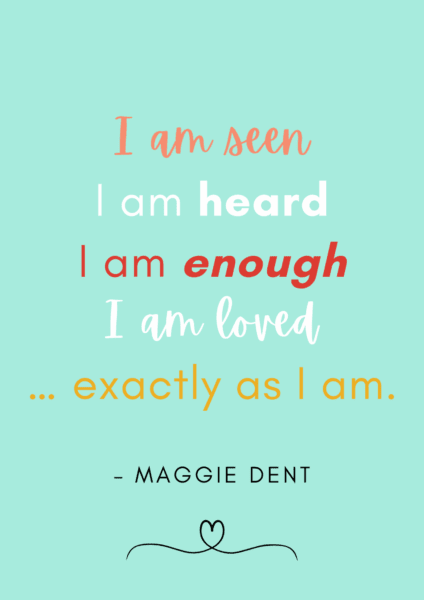
You are welcome to download this poster for your classroom or home via this link