


Body Safety / Talking Sex, Early Years, Babies & Toddlers, Newsletter Articles, Posts for Parents, Posts for Teachers
Keeping our children safe in childcare

Content warning: This blog touches on issues of child sexual abuse and child safety.
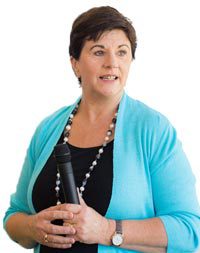
Last week, I joined two of my Ctrl+Shft colleagues, Kirra Pendergast and Madeleine West for a webinar on early childhood safety in the wake of some recent heinous allegations around child sexual abuse by an ECE in Victoria. Here’s what I shared…
In 2021, Australia was estimated to have 160,000 early childhood educators and this figure is now closer to 180,000 working in childcare and Family Day Care.
The absolute vast majority are exceptional early childhood educators well-trained, well supported and delivering high-quality care for children. Around 3% of early childhood educators are men, most of whom have been working competently, safely and enthusiastically for many years.
This sector has been undervalued, disrespected and unappreciated for far too long. Remember what happened in this sector during Covid?
The science of child development documents the importance of the first five years of life for future outcomes and a key aspect of development is a safe secure attachment. Well-trained educators know the importance of being safe, secondary attachment grownups in children’s lives and yet over time the push towards education rather than comprehensive care has driven many in the early childhood sector in the opposite direction to what children need.
There has been a lot of focus on men working in childcare in the recent new coverage. Our children need to be safe from abusers and those who hurt children – and this is not based on of gender, as we saw in the recent ABC Four Corners report Betrayal of Trust: Australia’s Childcare Crisis, which aired on 17th March 2025, where the abusers were women.
Why Family Day Care can be different
The regulations and requirements to become a family day care provider are very comprehensive and no doubt will continue to be strengthened and reviewed. The FDC model, where an ECE has a small number of children in their care, allows for much deeper and more personal relationships with families. FDC educators have to have significant training – there are no short cuts, there are no immature staff, and FDCs are strongly community based, so any concerns should be more easily noticed and addressed over time. There is a strong supportive network among home day carers and they are supportive of each other. This is a significant protective factor in terms of child safety. It is a much harder environment in which to hide.
FDC will need to upgrade their training regarding child safety just the same as the whole sector, and hopefully they will heed Madeline West’s recommendations that were covered in the webinar.
Parents should have conversations with their children’s carers about safety and boundaries, and raise any concerns with their FDC carer/educator and, if necessary, the Family Day Care Association.
What parents can do
In fact, in the webinar, Madeleine raised the importance of all parents having explicit conversations with the people who are caring for their children – whether that be in large day-care, family day care or otherwise – about what’s acceptable in terms of nappy changing, physical contact with children and boundaries around technology.
She also highlighted the importance of parents and educators knowing what sexual abuse is, what signs to look for in terms of potential abuse, and how to raise concerns if you have them. Children should be taught about body safety and consent from a very young age and these things should be modelled to them, all through the early years, so they can let us know when something is wrong.
You can find links to resources to support with this (and ways to have conversations with the people looking after your kids) in the webinar tip sheet here.
Systemic issues
Over time things have changed in childcare due to the massive expansion of the sector partly due to increases in Child Care subsidy.
Unfortunately, this expansion has placed enormous pressure on ECEs and a recent survey by the United Workers Union surveyed 2,100 people who work in childcare and found 77% of them were operating below safety requirements.
In an open letter sent by ECE Rebecca Saville to the Prime Minister and others, she writes:
“This isn’t just about burnout, or ratios, or funding. It’s about the cracks in every layer of the system – cracks so wide that serious breaches in ethics, safety, and professional standards are falling straight through.
“We do programming on scraps of time if we’re lucky, two hours a week. Many take it home, unpaid. And managers? They’re barely holding it together, juggling admin, recruitment, politics, and endless fires. This isn’t just burnout. It’s systemic collapse.”
In December, Rebecca followed up on the response from the government with a call for them to see beyond ‘reactive measures’ and to focus on the fact that “prevention comes from structure, not surveillance”.
For comprehensive change, we need to put children at the centre of our systems, whether that be early childhood or schools. Not grades, not shiny advertising, not profits, not smart uniforms, not new playgrounds – places safe for children to learn, to grow and to thrive.
For this to happen, the first thing we need is strong leadership that holds strong principles, with clear protocols on how to navigate any challenge that is out of alignment with best principles for raising children. That leadership has been lacking from the Federal Government, and ACECQA the national body responsible for early childhood education.
Federal Minister for Education Jason Clare and Minister for Early Childhood Education Dr Jess Walsh are finally taking action, introducing legislation to cut funding to childcare centres that fail to meet safety standards and Working With Children checks (more on that later).
The Federal Government has also announced stronger protections for using digital services in early childhood and policies regarding digital images, mandatory 24-hour reporting of any allegations, complaints, or incidents of physical, sexual abuse will now take much higher priority.
Many educators feel these changes are welcome but still not enough to keep our children safe. Many are calling for phones to be banned altogether. If that happens, then a lot of pressure for educators to captures images for parents will diminish which is a good thing.
As reported in a recent episode of the ABC’s 7.30 program, there is much more that could be done: establishing a national childcare commission, a key recommendation from the Productivity Commission in September 2024. Another option could be an independent review into the National Quality Standards or the performance of its oversight body, ACECQA.
He could also address the significant delay in the flow of funding to cover early childhood educators’ pay rise from last December. Only 20% have received the money and many high-quality centres who immediately began paying higher wages are struggling financially waiting for the promised funding!
A key concern that needs to be addressed is the ineffectiveness of the Working With Children check.
There are some serious flaws in the Working With Children check system, it is broken and urgently needs to be fixed.
WWCCs operate separately in each state or territory, and so there is no national sharing of information, which means offenders can move across borders without detection. Secondly, WWCC’s the checks do not show whether individuals have been investigated in any other sector, such as aged care or disability. And the only people registered of concern are those who have been convicted of charges, not those who have been investigated or are currently being investigated.
We heard from educators in the comments/messages around the webinar that reporting a fellow staff member can be problematic as well and often the concern is dismissed in order to keep staff numbers at an acceptable levels.
Parents too sometimes find their concerns are not addressed sufficiently (as has come out this week in the case that is currently being investigated in Victoria). These red flags need to be better monitored and addressed.
Changes to the early childhood education sector
As ABC investigative journalist Adele Ferguson wrote recently: “None of this addresses the elephant in the room: the dominance of private operators and the inherent conflict of interest between profit and child welfare.”
Over the last few years there has been a significant proliferation of profit-focused early childhood centres and this has come at a cost to educators and our precious children. Now I acknowledge of course that there are many private operators that are doing the right thing and genuinely care about our children’s welfare and education as can be seen in my recent call out for people to show their appreciation to exceptional centres. Also, there are many exceptional educators working in the for-profit sector and in no way are they to be blamed for the challenges. Many have spoken to me about how they feel torn between their knowledge of child development and the drive to ensure profits for shareholders!
The rapid building of for-profit early childhood settings has seen an increase in what Ferguson calls “the widespread fraud and compliance failures uncovered in the auditor-general’s recent report into childcare subsidies, which estimated $2.6 billion has been sucked out in the past five years. But as many know it is the tip of the iceberg”.
Our kids deserve more than being raised by a system built for profit.
The issues of ratios
The sector is riddled with complexity, failure and risk. While there are some good operators and good, passionate educators, it is getting tougher for families to find quality care.
As Saville’s letter shared: “We had educators leave our service while on performance improvement plans specifically around unsafe supervision. Rather than improve, they quit. Weeks later, we found out they were working at new centres. No reference checks. No follow-up. And shockingly, they were being left alone to supervise children in their first week.
“This isn’t about gender. It’s not about male educators. It’s about all educators. No one should be working alone with children when their history is unknown, their behaviour unproven, and their references unchecked. But here we are again and again, sweeping risk under the rug until tragedy happens.”
What’s really broken?
“The assessment and rating system that’s supposed to ensure quality? It’s failing. I know of services with serious breaches with pets on site that have bitten children, educators with documented misconduct who remain open and even expand. Why? Because connections, corners cut, and loopholes protect the wrong people.”
“During A&R visits, problematic educators are hidden in training rooms. Others are shielded by being ‘the only one with a degree’ and services can’t afford to lose them. Hiring friends and family without qualifications? Common. And it compromises safety, ethics, and culture.
“Even language barriers play a role. Many educators born here or not struggle to understand the EYLF or mandatory reporting processes. If educators can’t interpret core documents, how can they implement them?”
Here’s what we urgently need
I am sharing these suggestions again from Rebecca Saville’s letter and have peppered these with my own thoughts and some comments I’ve received from educators.
- Lower staff-to-child ratios so educators can be present and responsive. Let’s fix the use of under-roof ratios and also sending staff home early because of a drop in numbers. Both practices result in less staff on the floor. Staff should remain on the floor for entire rostered shift. Let’s keep two staff members on the floor at all times.
“I hope putting pressure on government to mandate better ratios in early childhood environments is part of the conversation. On every early childhood educators’ discussion and professional pages we are all wanting better and safer ratios that are enforceable. The existing ratios in every state and territory are outdated for our present landscape,” wrote Kelley Nagel on my Facebook post about the webinar. - Legislated bans on solitary supervision a basic safety requirement.
- Stricter conflict-of-interest rules, especially around hiring friends and family.
- Mandatory training for all new service owners, regardless of background. Ensure Proprietors, if not EC Qualified themselves, stay out of curriculum and let qualified teachers run play-based programs.
- Address the broken training systems – Interview candidates for course acceptance (like the old days ) to ensure people enrolling are not simply doing it for visas, or because they think it is a cushy job that doesn’t require effort. ACECQA only accredit legitimate courses of two- to four-year depth from reputable Universities and TAFES that demand a level of commitment, practicum and expertise . Shortening a four-year degree to graduate diplomas that take up to 10 months without no prior childcare or teaching experience (and no practicum), by some universities as reported by the ABC is not high quality education!
- Targeted support for educators with language barriers and accessible training for families to recognise and report concerns.
- A transparent, responsive complaints process where whistleblowers are protected, not punished – maybe consider an anonymous register for concerns.
- Real consequences for services that breach safety standards not rubber-stamp approvals.
- Get rid of ridiculous documentation of children’s daily activities on digital platforms and apps – these take away from educators’ time for real engagement with children, and we need to shift the focus back on to them and not parents.
My colleague Kirra Pendergast also has concerns about the digital safety and embedded risk of using these digital sharing platforms, including their potential to be used for digital harm (deepfakes, data scraping, AI facial recognition, etc.), inadequate training and policies, and lack of informed consent.
- Much more and thorough scrutiny of agency educators, especially those who are visiting multiple centres as casual staff.
- Security cameras to be installed in key areas of concern immediately as this will act as a deterrent to any abuser in any centre.
- There must be a priority to increase assessments, especially of centres that are not meeting acceptable standards. Some centres have not been assessed in 10 years and many of those not achieving appropriate standards have continued to function as per normal. More regular compliance and assessments are needed with at least one unannounced visit every 12 months. Surprise visits are crucial for providing regulators visibility into each services day-to-day practice and to deter poor and unsafe conduct.
- Several have suggested that rather than pouring millions of dollars into the early childhood sector that has led to the profit-over-children dilemma, maybe the Federal Government should offer to put some of that money into families and support those who have a parent who can and wants to care for their child at home, or pay extended family to do that during the early years of their life.
WE can’t wait for the government or ACECQA to fix what’s broken.
Every centre can immediately do the following:
- Insist on no solitary supervision in vulnerable areas.
- No phones for educators, only directors.
- Place security cameras in key areas of centre.
Final words from that letter sharing the thoughts from ECEs…
“But most of all, what is needed now? Listen to the educators. We’re not just raising problems we’re offering solutions.
We’re not ‘just’ educators.
We’re advocates.
We’re protectors.
And we will not be silent.”
And on a personal note, I am beyond grateful and thankful for the exceptional educators across Australia who have cared for my precious grandchildren and who are still caring for them now. Let’s work together to advocate for our children and the people who care for them, to make this system better.
To access the Ctrl+Shft Critical Conversation on Early Childhood Safety webinar replay for free, click here and ‘add to cart’. You can find the tip sheet from the webinar here. Learn more about how Ctrl+Shft is helping schools, homes and workplaces to mitigate and deal with digital harm. ctrlshft.global